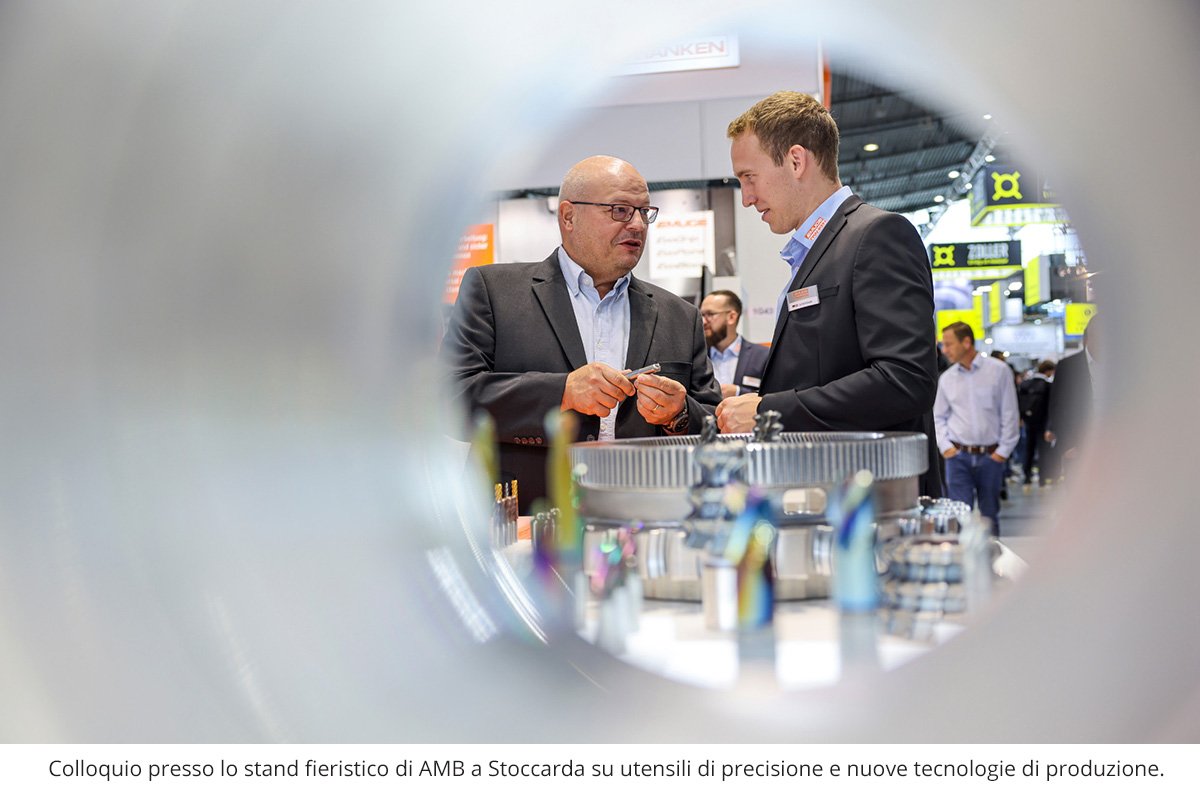
The circular economy is one of the central themes of AMB 2026.

Publié le 16/04/2026
The circular economy is one of the central themes of AMB 2026.

Sustainability, digitalization and automation: the key topics of AMB // AMB 2026 will also focus on the exchange of ideas and current developments

"Where metal comes alive": with this new slogan, AMB opens its doors in Stuttgart from September 15 to 19, 2026. Across all ten exhibition halls, AMB offers a comprehensive overview of current technologies and highlights industry trends such as sustainability, digitalization, and automation. These concepts are brought to life through concrete application examples: sustainability is presented in the context of recycling and the circular economy, while in digitalization, the fair focuses on artificial intelligence in manufacturing, and collaborative processes serve as a vivid example of modern automation.

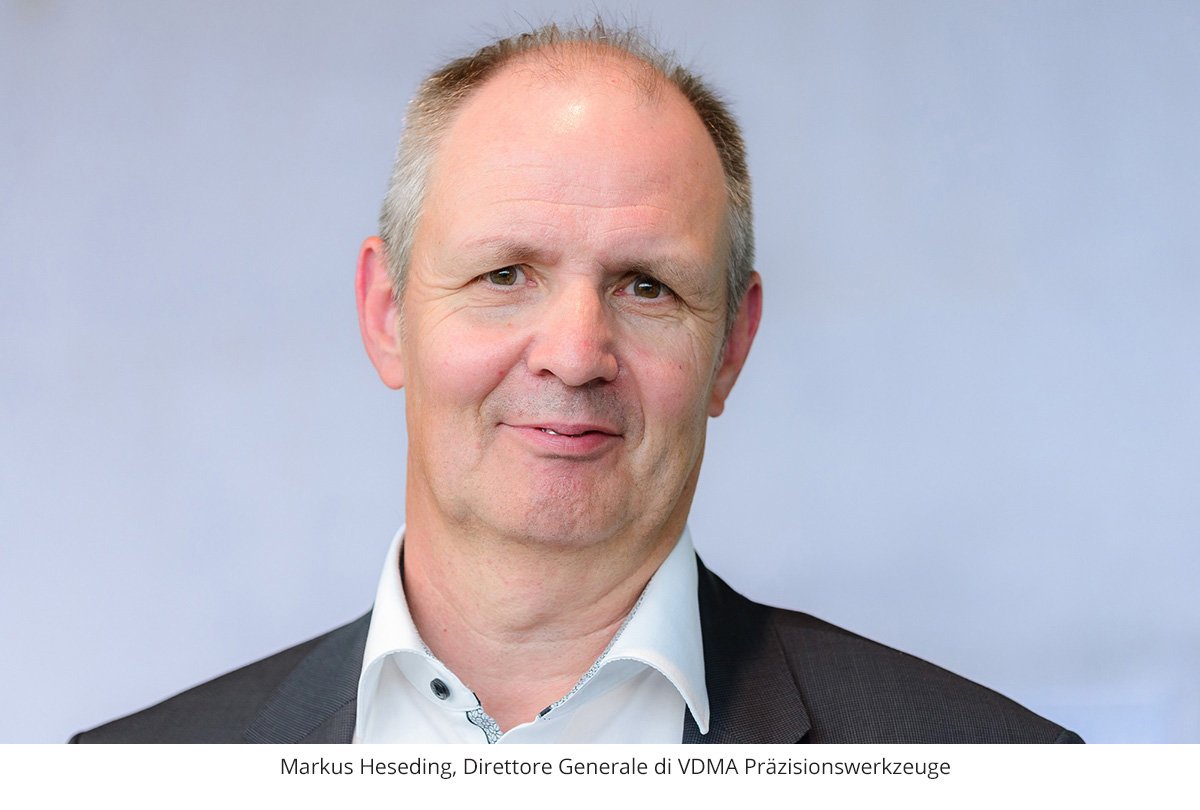
We delve into one of these topics in a conversation with Markus Heseding , General Manager of VDMA Präzisionswerkzeuge : we talk about the circular economy, carbide sourcing and tool recycling, as well as the role of AMB 2026 as a reference event for the sector.

Messe Stuttgart: Mr. Heseding, in your opinion, what will shape the sustainability debate in 2026, and what are the most important topics for the VDMA in the recycling sector?

Sustainability has become a strategic economic factor. In 2026, the challenge will be to reconcile environmental responsibility, security of supply, and competitiveness. For the precision tools industry, three issues are clearly central: the recycling and return of tool packaging, the sourcing of hard metals for the metalworking industries, and the Product Carbon Footprint as a basis for transparent and comparable CO2 data.

Messe Stuttgart: In the following interview, we'd like to focus on the first two points. You've always emphasized that every gram of carbide remaining in Europe is an asset. What specifically is needed to keep tungsten in the European supply chain, and where can the industry start?

Competition for tungsten is increasing globally, especially because other sectors, such as the defense industry, are significantly expanding their demand. At the same time, Europe has very few primary tungsten mining projects, and our heavy dependence on Chinese supplies is risky.

This is currently leading to significantly rising costs, a lack of price stability, significant supply uncertainty, and a complete lack of predictability. This is particularly critical because carbide tools are key components in the metalworking industry, in virtually all machining processes.

In this context, recycling is becoming even more important. Carbide recycling in Europe has been an environmental and economic success for decades. Europe therefore needs resilient supply models that combine the circular economy, technological innovation, and fair industrial partnerships.

This is why keeping tungsten in the European cycle is so crucial. Carbide scrap is a strategic resource: every gram that remains in Europe strengthens our industrial sovereignty. In recycling, we need more effective take-back systems, higher collection rates, and consistent quality standards. Our customers can also make a significant contribution by selling their carbide scrap to European partners. Our motto: "Those who commit to the European cycle remain strong in the tool technology sector!"

Messe Stuttgart: In addition to tungsten recovery, the question of how to successfully market tool packaging made from recycled materials is increasingly emerging. What steps are needed to effectively promote the use of recycled materials in the metalworking industry? What are the main objectives of your packaging recycling working group?

When using recycled materials, technical feasibility is rarely the issue. The challenge lies in the fact that tool packaging has a low market value, and recycling is often difficult to demonstrate as an economically viable activity. Additional obstacles include scalability, availability, and consistent quality standards. It is particularly important to collect sufficient quantities of pure material for reliable production.

In the VDMA "Tool Packaging Recycling" working group, we collaborate with partners along the value chain to find viable solutions. A field trial has implemented, for the first time, a functioning system for the return and recycling of used packaging made from post-consumer recycled material, which is then tested and reprocessed. This creates a valid basis for a closed-loop system.

Today, pioneering companies already offer tool packaging made entirely from recycled materials: some manufacturers have already completed the transition. These solutions will be clearly presented at AMB 2026.

Messe Stuttgart: How can these three topics—hard metal recycling, recycled packaging, and CFP—be highlighted at AMB? Which practical initiatives or projects will VDMA focus on in 2026?

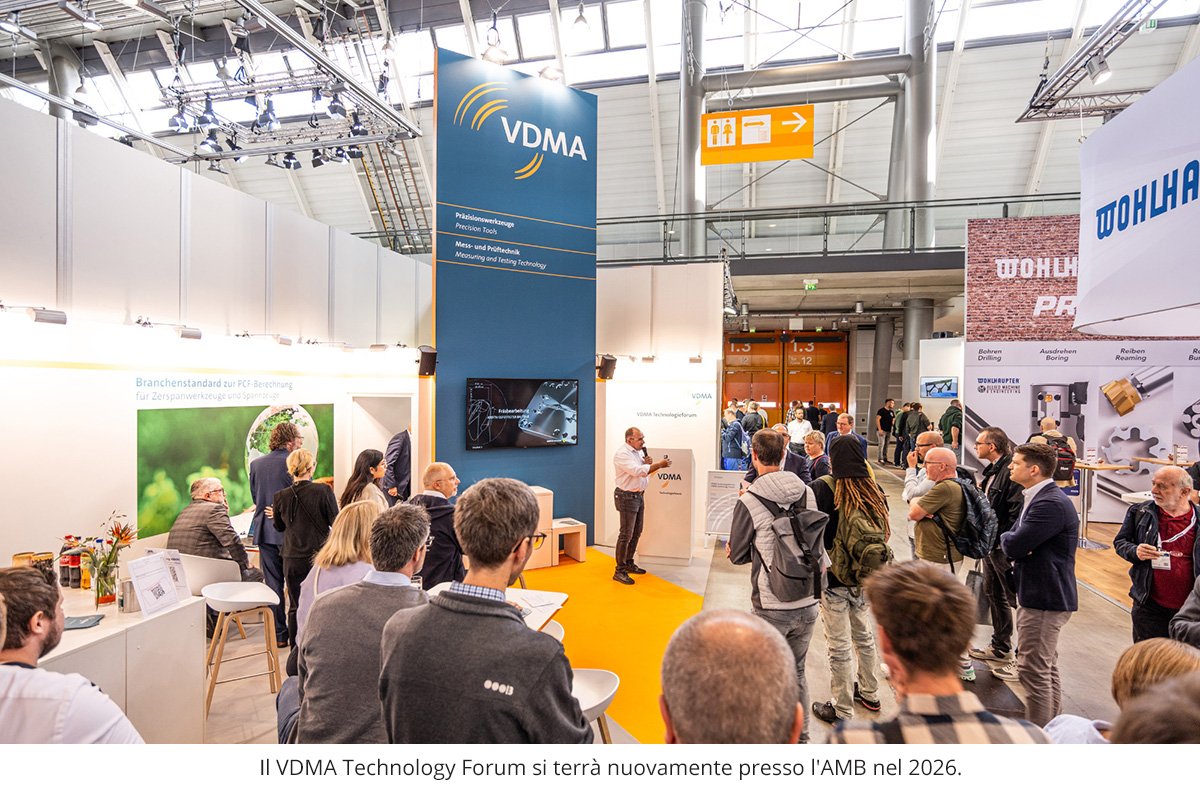
Many companies will be presenting their latest developments at AMB, making the trade fair particularly interesting. We will also be exploring this aspect in depth at the VDMA Technology Forum, at booth B50 of the L-Bank Forum (Hall 1). We will demonstrate how sustainability, the circular economy, and digitalization can be concretely implemented in the precision tools industry. Digitalization supports these topics through transparent material flows, digital documentation, and standardized processes along the entire value chain. Numerous VDMA member companies and research partners will be presenting their solutions. We will also be showcasing the cutting-edge results of our recently completed research project on increasing the efficiency of hard metal recycling.

Messe Stuttgart: To what extent can AMB, as a leading trade fair for the industry, accelerate the exchange and development of solutions to these challenges? What role do cross-industry dialogue and personal interaction play at AMB?

One advantage is that AMB brings together the entire metalworking process chain. The majority of visitors will come from Germany, the beating heart of the industry. Equally important will be the international visitors, who traditionally come in large numbers from Switzerland, Austria, and Italy, but also from the Netherlands, France, Sweden, the Czech Republic, and Turkey. AMB excels at bringing together technological innovation, international reach, and the entire industrial production process chain.

Especially in a period when the industry is simultaneously subjected to economic, geopolitical and industrial policy pressures, this exchange is indispensable.

We all hope that AMB can provide a significant economic boost. It's a place where companies can evaluate investments in future technologies, experiment with new applications, and strategically position themselves for the next stages of development.

About AMB

Since 1982, AMB has presented the highlights of the international metalworking industry. "Where metal comes alive": It will also be a permanent fixture on the industry's agenda in 2026, this year from September 15 to 19. It is the international marketplace and meeting place for metalworking, showcasing the latest products, technologies, innovations, services, and concepts in all their facets. AMB is supported by sponsors VDMA Präzisionswerkzeuge, VDMA Software und Digitalisierung, and VDW Verein Deutscher Werkzeugmaschinenfabriken e.V. (German Machine Tool Manufacturers' Association).
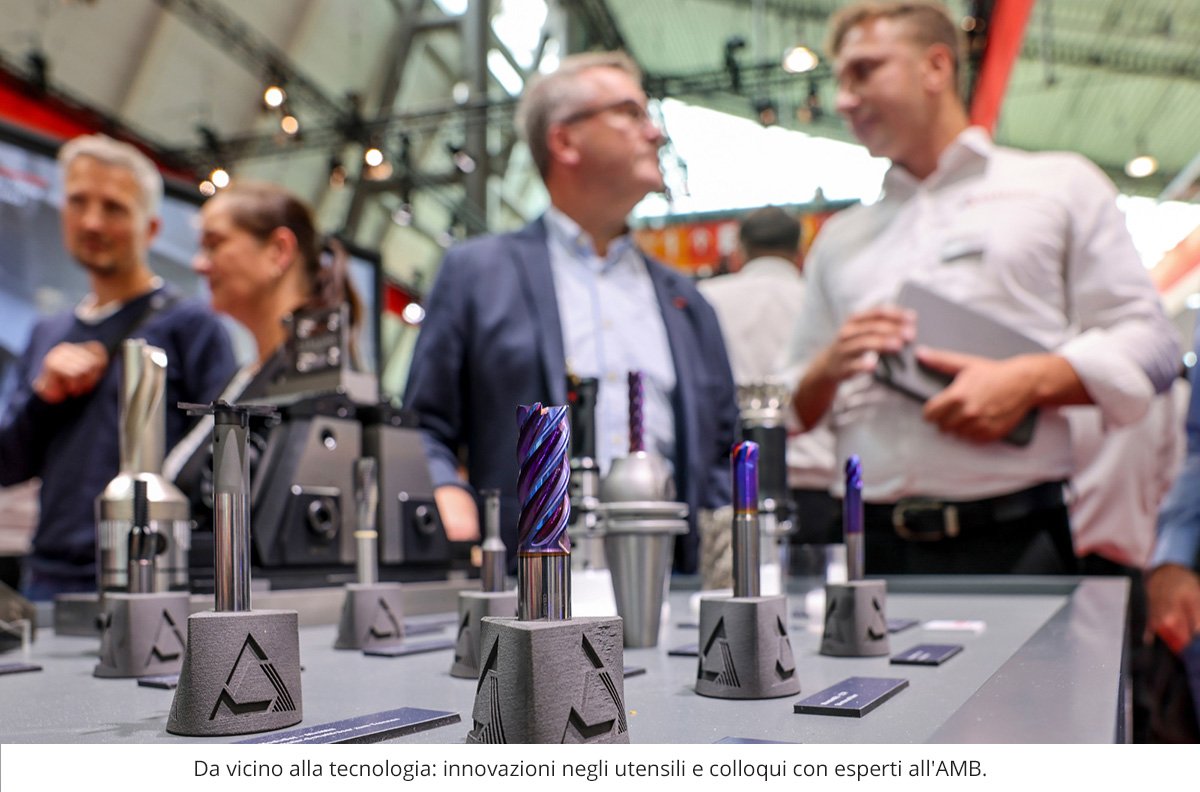
Pour plus d’informations: AMB 2026
The circular economy is one of the central themes of AMB 2026.

Autres articles susceptibles de vous intéresser

Ucimu: orders index in the third quarter of 2026 rise (+10.5%) foreign orders (+24.7%); domestic ord

In the third quarter of 2026, the machine tool orders index compiled by the UCIMU-SISTEMI PER PRODURRE Study & Business Culture Centre recorded a 10.5% increase compared to the July-September 2025 period . In absolute value, the index stood at 58.9 (base 100 in 2021). In particular, orders collected across borders grew by +24.7% compared to the third quarter of 2025, for an absolute value of 108.6. Order intake in Italy, however, decreased by 7.1% compared to the same period of the previous year. The absolute value of the index stood at 14.3. Riccardo Rosa , President of UCIMU-SISTEMI PER PRODURRE, stated: " Domestic demand remains weak despite the numerous ongoing negotiations. The uncertainty of the international context and the increase in energy costs are clearly impacting the activity of Italian manufacturing operators, who are postponing investments pending greater clarity. We are therefore confident ," added President Riccardo Rosa , " that Italian demand will be able to regain momentum, also supported by the hyper-depreciation measure which, in version 5.0, allows for better planning of investments, which can be spread out until September 2028. " Italian manufacturers' activity on foreign markets, however, has been decidedly dynamic. In addition to the United States, where demand remains particularly strong, Germany is also beginning to show signs of recovery: certainly good news for the Italian industry in the sector. According to data processed by the UCIMU-SISTEMI PER PRODURRE Study & Business Culture Centre, in the first half of 2026 (latest available data), the main outlet markets for Italian supply in the sector were the United States (329 million euros +12.6%) and Germany (137 million euros, +7.6%), followed by France, Poland, and Spain. “In particular, the aerospace and defense sectors, as well as the energy sector, are driving orders, regardless of the country of reference,” concluded Riccardo Rosa . These are the latest sector data presented by the president of UCIMU-SISTEMI PER PRODURRE, Riccardo Rosa , on the occasion of the inauguration of 35.BI-MU, the international sector event taking place at fieramilano Rho from 12 to 16 October . Speakers at the meeting chaired by Rosa included Valentino Valentini , Deputy Minister of the Ministry of Enterprise and Made in Italy; Giovanni Bozzetti, President of Fondazione Fiera Milano; Simona Greco , Hosted Exhibitions Director of Fiera Milano; and Luca Durante , Head of the Capital Goods Office at ICE-Agenzia. The second part of the event featured an interview with Gian Piero Cutillo, Co-General Manager of Leonardo, and Roberto Vavassori , Executive Director of Brembo and President of ANFIA, conducted by Paolo Bricco, Special Correspondent, Il Sole 24 Ore. The event features over 400 companies , spread across a total area of ​​40,000 square meters in pavilions 22 and 24. The spotlight will be on machine tools, robotics, automation, additive manufacturing, digital manufacturing, artificial intelligence, measurement and quality control systems, components, and enabling technologies for the smart factory. The event, promoted by UCIMU-SISTEMI PER PRODURRE and organized by EFIM-ENTE FIERE ITALIANE MACCHINE, significantly enhances the thematic cultural dimension. Over 50 events are planned , including conferences, workshops, and round tables. New features this year include two special forums dedicated to the Aerospace & Defense and Energy sectors, strategic sectors that will be analyzed through the direct testimony of production and operations directors of some of the main international players and the CEOs of several Italian SMEs. In terms of training, the VLF4EU (Virtual Learning Factory for EU) International Conference is particularly relevant, focusing on an innovative training system based on the Digital Twin of the factory. The conference will feature around thirty researchers from Denmark, France, Slovenia, Spain, Sweden, and Italy. The relationship between young people and the world of work will be explored in depth at the meeting " Value, Future, Impact. Work According to the New Generation ," organized by ANIPLA with the patronage of the UCIMU Foundation. These conferences are part of the Skills Area 's calendar of meetings. Located in Pavilion 24, the Skills Area will host initiatives promoted by UCIMU Academy and the UCIMU Foundation . Among these, ROBOTGAMES , the automation and robotics competition for secondary school students, now in its second edition, will once again be held.

13/10/2026 En savoir plus

Mechanical exports exceed 20 billion euros in the first half of the year

The figures presented at Anima Export Days 2026: +2.8% compared to the same period last year. Exports are growing in the USA, China, and Germany. Exports of the mechanical engineering sector represented by Anima Confindustria reached €20.4 billion in the first half of 2026, up 2.8% compared to the same period in 2025. The data, processed by Anima's Statistics Office based on Istat data, were presented during the Brescia leg of Anima Export Days , the initiative dedicated to the internationalization of the Italian mechanical engineering sector. Running from September 28th to October 1st, the event is bringing together companies in the sector with selected international buyers. Now in its sixth edition, the Export Days are a collaboration between Anima Confindustria, the Ministry of Foreign Affairs and International Cooperation (MAECI), and the Italian Trade Agency (ITA), with the aim of fostering new trade relations and supporting the strengthening of Italian companies' presence in foreign markets . This year, the B2B meetings involve operators from over 20 countries and are taking place in four locations : Borgosesia, Turin, Brescia, and Bassano del Grappa. The initiative comes at a time when geopolitical tensions and uncertainties over trade policies continue to impact international trade. Against this backdrop, data for the first half of 2026 paint a resilient picture for the mechanical engineering sector, represented by Anima. Exports from Anima's sectors totaled €20.4 billion , up 2.8% from €19.8 billion in the same period in 2025. The trend confirms the sector's strong international vocation , albeit with varying trends. The main export components include valves and faucets , gas turbines, hydraulic pumps, and air conditioning systems. Other sectors are showing positive results, while others are experiencing a decline. Geographically, the United States remains the leading destination market for exports in the animal and animal sectors, with €2.38 billion in the first six months of 2026, up 2.4% compared to the same period of the previous year. Germany follows, with €1.99 billion (+4.8%), and France, with €1.81 billion (+2.9%). Alongside the more established European markets, some particularly significant trends are emerging in non-EU areas, starting with China, the Middle East, and North Africa. Despite a general decline towards the Gulf countries (-3.7%), exports to Saudi Arabia grew by 14.6% (665.1 million euros) , supported by the sectors related to process plants, energy, infrastructure and cooling. In China , exports of the Anima sectors grew by 22.3% and reached almost 720 million euros . The aeraulic systems sector was the main driver of this increase. Steam turbines and air compressors also recorded good growth in China. Algeria's growth was even more significant, rising 146.7% from €173.3 million to €427.6 million. This result was primarily driven by technologies such as gas turbines (which account for approximately 47% of total exports to the country), valves and taps, as well as pressure products and equipment. These flows are often tied to individual orders and therefore not necessarily characterized by continuous trends, but the data highlights the ability of Italian companies to seize opportunities even in rapidly developing markets. "The 2.8% growth in exports in the first half of the year confirms the ability of Italian mechanical engineering to maintain a competitive position on international markets, even in a period characterized by geopolitical tensions and trade uncertainty. The United States remains the primary destination market, while the results in China and Algeria demonstrate the ability of companies to seize opportunities in different markets. This is a sign of resilience that must be accompanied by greater diversification and a strengthened international presence. In this regard, the Export Days represent a concrete tool for creating new relationships and business opportunities," stated Pietro Almici, president of Anima Confindustria . On the import front, in the first six months of the year, the Anima sectors recorded a 1.2% increase, for a total value of 9.73 billion euros; this figure completes the current trade picture and confirms the centrality now assumed by international markets beyond the European one. It is in this context that Anima is renewing its Export Days , transforming market analysis into a concrete opportunity for supply and demand to meet.

05/10/2026 En savoir plus

Steel exports: the top ten hubs are worth €6.9 billion.

In the first half of 2026, exports from the main steel districts grew by 1.9%. Imports decreased by 9.2%. The Italian steel industry is holding up on foreign markets, but at very different rates across regions. In the first half of 2026, exports in value of steel products, pipes and other products from the first transformation of steel from the top ten Italian steel hubs reached almost 6.9 billion euros , compared to 6.7 billion in the same period of 2025, marking a growth of 1.9% . The data for the top ten hubs is more dynamic than the overall export trend: overall, they fell by 0.1% in value in the half-year, compared to a 0.2% increase in volume . This slight decrease, explains the siderweb Research Office, is due to lower sales prices. The rankings confirm Brescia at the top. Udine maintains second place, and Cremona third. However, the rankings show significant changes: Milan gains two spots, Reggio Emilia gains one, while Bergamo loses two and Lecco loses one . Brescia strengthens its leadership. Milan climbs. The Brescia hub remains Italy's leading steel hub in terms of export value, recording growth of 7.1% . This increase allows Brescia to widen its lead over Udine: the gap between the top two hubs increases from 74.7 to 96.5 million euros . Udine maintains second place with a 5.3% increase in exports. However, Cremona recorded the strongest growth among the top ten hubs, consolidating its third place: +12.6%. Mantua , fourth in the ranking, saw a 5.8% drop in exports. Milan saw significant growth, rising two places with a 4.5% increase. Vicenza retained its sixth position, with export values ​​essentially unchanged compared to the first half of 2025. The most negative figure in the ranking is that of Bergamo , which recorded a 19.5% contraction in exports and dropped two positions. On the other hand, Reggio Emilia recorded one of the most significant increases, with an 11.1% increase, and rose one position. Terni grew by 7.8% and maintained its eighth place. Lecco rounded out the top 10, with exports down 3%. Taranto , home to the Acciaierie d'Italia steelmaking hub, is also outside the top 20 in the first half of 2026. Exports fell by 86.5%. In 2025, the value had fallen by 40.3% compared to the previous year, stopping at 42 million euros (362 million in 2022). Imports: €500 million less from the top ten hubs The picture is changing for foreign purchases. In the first half of 2026, imports from the top ten steel hubs decreased by 9.2%, from 5.8 to 5.3 billion euros : approximately 500 million euros less in a year. At the national level, the contraction is even more marked: imports of steel products, pipes, and other products from the first steel transformation decreased by 13% in value and 15.9% in quantity. The different dynamics between European and non-EU suppliers is particularly significant. Imports from non-EU countries decreased by 22.5%, equal to approximately 1.6 million tonnes, while those from EU countries decreased by 2.1%. In the context outlined by the analysis by the siderweb Research Office, the reduction in non-EU purchases is also linked to the full implementation of the Carbon Border Adjustment Mechanism (CBAM) .

02/10/2026 En savoir plus
Abonnez-vous à notre newsletter
Pour rester à jour sur les dernières nouvelles du monde industriel
Contactez-nous
Newsletter Image Lindustriale
Dati Legali

L'industriale s.r.l.
P. IVA: 12212870153
Codice Fiscale: 12212870153

Sede Legale

Via Carlo Dolci, 32
20148 Milano (MI)
Italy

Registro Imprese

Iscrizione R.I.: 12212870153
REA: MI-1539011
Capitale sociale: Euro 10.400,00 i.v.

Top
This website is protected by reCAPTCHA, therefore the Google privacy policy and terms of service apply.