Proving absolute effectiveness compared to competing high-volume drilling solutions
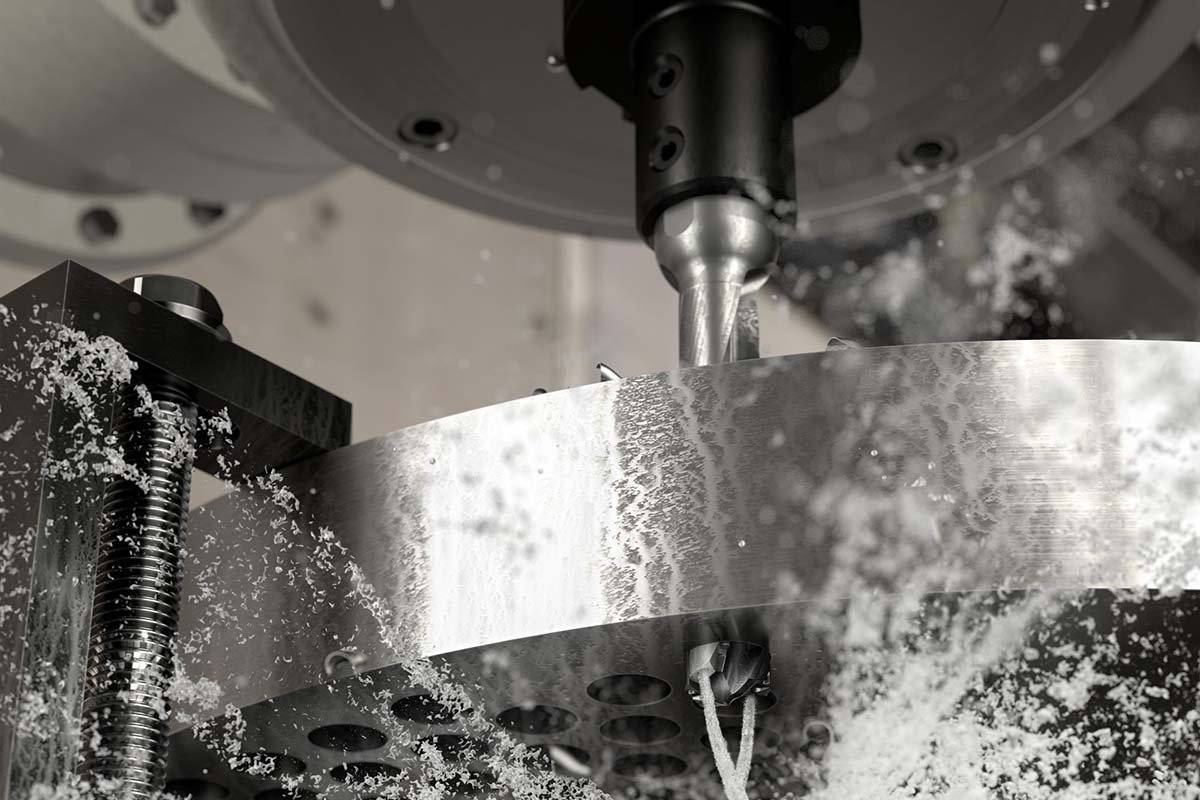
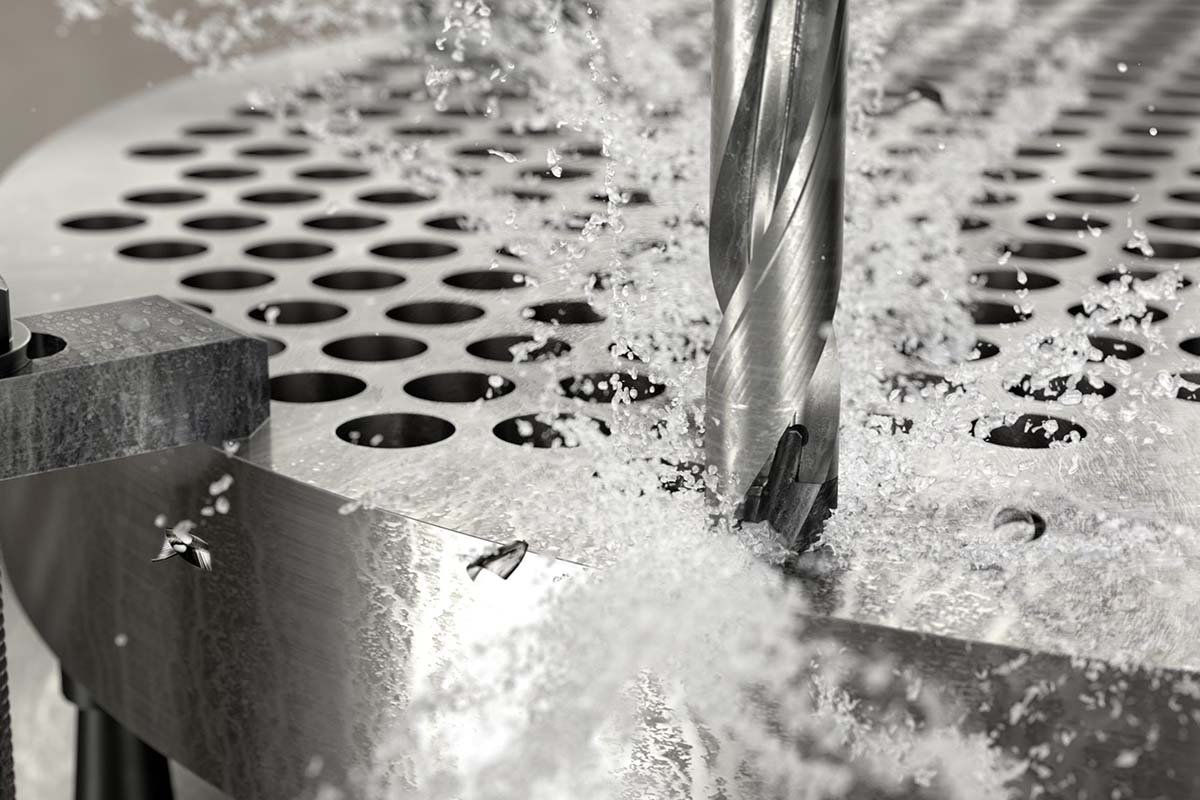
When Sandvik Coromant launched CoroDrill® DE10 in March 2025, the goal wasn't simply to introduce a new drilling tool. The exchangeable-tip drill was the first of its kind in high-volume drilling, offering a plug-and-play approach and a universal M5 geometry for faster, higher-quality results and greater versatility. But none of these advantages really make a difference until you understand their importance in real-world situations. In this article, Mikael Carlsson, Global Product Specialist for Indexable Rotating Tools at Sandvik Coromant, shows what the CoroDrill® DE10 can do.
This tool was developed with three main goals in mind: ease of use, reliable performance, and adaptability. It features a patented tip-body interface and a high-strength steel drill body, which together ensure maximum stability under demanding cutting parameters.
One of the most innovative features of this tool is the injection-molded solid carbide tip, a first for Sandvik Coromant. By adapting the powder injection molding process, traditionally reserved for plastics, the team was able to achieve a more precise and consistent tool geometry. This has enabled greater control of the drill center and a more robust corner design, ensuring reliable tool performance even under challenging cutting conditions.
Another key feature of CoroDrill® DE10 is the patented pre-tension clamping interface, which combines intuitive design with superior security. This interface enables quick and easy drill bit changes without spare parts, ensures reliable drilling at high speeds and feeds, delivers higher clamping force, and produces straighter holes with tighter tolerances without the need for a pilot drill. Furthermore, thanks to its longer drill body life, CoroDrill® DE10 is the most robust exchangeable-head drill of its kind.
However, regardless of these advantages, a tool must prove its worth in real-world machining environments if it is to truly transform the way manufacturers approach holemaking operations.
A tool that makes a difference in ISO P applications
Following its launch, Sandvik Coromant decided to test the performance of CoroDrill® DE10 through an extensive global benchmarking program. Over several months, four Sandvik Coromant Centers (in Sandviken, Sweden; Renningen, Germany; Chongqing, China; and Mebane, USA) conducted rigorous tests in real-world production scenarios. Each site applied standardized cutting parameters on different materials, such as steels (ISO P1 and P2) and stainless steels (ISO M1), comparing CoroDrill® DE10 with leading market competitors.
For a complete overview of the tool's performance, several properties were tested and analyzed: hole diameter, surface quality, burr height, chip formation, tool life and process security were evaluated and compared with six competitors' solutions, using the same cutting data in each test for the three materials tested.
The results were always in favor of CoroDrill® DE10. At Sandviken, where tests on high-strength ISO P2 materials pushed the drills to their limits, CoroDrill® DE10 achieved H9/H10 hole tolerances with exceptional process security, while the other two tools tested failed to achieve this level of accuracy. CoroDrill DE10 achieved consistent surface quality (Ra 0.8–1.3 µm) without damaging the tool, while competitor tools suffered chipping or edge wear despite having similar surface roughness.
Other ISO P tests showed encouraging results. In Germany, where tests were performed on an ISO P1 workpiece, CoroDrill® DE10 improved or maintained surface finish values under optimized conditions (1.2–1.9 µm), while a competitor's tool significantly deteriorated to values of 3.3–3.8 µm, even after optimization – a sign of process instability and poor edge quality. The other competitor showed an inconsistent surface finish from the start and was not subjected to further testing due to unsatisfactory performance.
Images from the wear tests conducted in Chongqing undeniably demonstrate that CoroDrill® DE10 offers more stable and predictable wear patterns than competitors. CoroDrill® DE10 showed only slight flank wear and minor abrasion after 41 meters of drilling, with no edge fractures observed. The wear was uniform and predictable, indicating controlled cutting forces and stable chip evacuation. On the other hand, a competitor achieved a similar cutting length, but experienced corner fracture and cutting edge damage. These wear phenomena, linked to underlying brittleness, are a sign of instability, most likely due to chip adhesion or microfractures on the cutting edge. Another competitor reported significant wear after just 38 meters, with chipping of the cutting edge and poor coating integrity.
Highest precision in ISO M
The strengths of CoroDrill® DE10 were also evident in tests on ISO M materials. At the Mebane facility, the tool performed better in every test, outperforming competitors thanks to the best compromise between precision, surface quality, stability and tool life.
In the tests, CoroDrill® DE10 achieved a high level of precision in the hole diameter (in a range of 13.03–13.05 millimeters) while maintaining a uniform surface finish (Ra 0.7–1.0 µm). It completed over 52.5 meters of holes without reaching its tool life limit, unlike the other tools, which reached their wear limits at the same cutting length.
The results for ISO M1 materials were also positive for Sandviken. CoroDrill® DE10 exceeded 76 meters of drilling and was still usable, while the competitor stopped at just 53 meters with initial chip formation deterioration. The tool also maintained consistent hole diameters of 13–13.02 millimeters, meeting H9/H10 tolerance classes. The competitor tool, however, produced slightly undersized holes of 12.99–13.02 millimeters. While this is an infinitesimal difference, even the smallest deviation in hole size can cause problems with real-world part assembly.
It's one thing to bring a new solution to market, but demonstrating its capabilities versus competing solutions is another challenge entirely. The innovations behind CoroDrill® DE10 aren't just exciting; they make a real difference in high-volume drilling.
Learn more about CoroDrill® DE10 by viewing technical insights, videos, and customer success stories on the Sandvik Coromant website.
Digital monitoring improves motor reliability in a cement manufacturing plant
WEG and Nuova Ites implement WEGSCAN solution to improve efficiency Nuova Ites Srl, a leading European company specializing in the repair and overhaul of rotating electrical machinery, recently partnered with industrial equipment manufacturer WEG to improve operational monitoring of one of the key industrial motors at a cement plant. As part of its ongoing commitment to reliability and performance, Nuova Ites installed the WEGSCAN electric motor monitoring system, a cutting-edge solution developed by WEG to monitor motor performance and identify potential issues before they impact operations. Nuova Ites, a specialist in the repair and overhaul of rotating electrical machinery across Europe, with over 800 wind turbines fully serviced in collaboration with leading operators such as Vestas, Enel, and ERG Renew, identified the need for continuous motor monitoring in a high-load application. In this case, a 132 kW, 2-pole WEG special series motor was coupled to an Atlas Copco compressor, forming a critical component of the customer's production process. Performance and reliability in this mixed-equipment configuration were crucial, but visibility into the motor's condition was limited. To address this issue, WEG supplied and installed a complete monitoring solution consisting of the Cassia X2000 Gateway and the WEGSCAN 100 unit. Following a WEG technical visit to the Nuova Ites workshop in late 2025, the equipment was ordered and delivered in early January 2026. The system was configured on-site to meet the specific application requirements and integrated into the monitoring processes of both Nuova Ites and the cement plant. The WEGSCAN system is designed to support real-time monitoring of multiple operating parameters, including vibration signatures, temperature trends, and other mechanical and electrical health indicators. Its dual-access capability allows engineers to view data from a standard PC interface or smartphone, facilitating remote condition monitoring and immediate performance visibility. Supporting the monitoring infrastructure is the Cassia X2000 Gateway, which serves as the system's communications hub. The gateway enables reliable wireless connectivity between the WEGSCAN device and the wider network, ensuring that operating data from the engine can be transmitted and accessed in real time. Designed for demanding conditions, the gateway operates over a wide temperature range of −40 to 65°C, ensuring stable communication between sensors and monitoring systems in harsh operating environments. By acquiring continuous operational data, Nuova Ites is now able to identify early signs of abnormal behavior and proactively plan maintenance, helping to reduce unplanned downtime, optimize service interventions, and improve overall energy efficiency. This level of insight is particularly valuable in environments where the costs of downtime and reactive repairs are high. "For Nuova Ites, the monitoring system has become an essential tool in its service portfolio, helping to integrate condition-based maintenance into the standard workflow and offering customers greater reliability and full lifecycle support," said Fabrizio Arosio, Head of Drive and Automation Systems at WEG Italia. “With the ability to more closely monitor critical engines, the company is better equipped to anticipate problems, optimize maintenance planning, and provide data-driven insights that add measurable value to asset performance and business continuity.” Digital monitoring technologies like WEGSCAN also help make industrial operations more sustainable. By providing continuous information on engine performance under real-world operating conditions, operators can keep equipment closer to its optimum efficiency point. In energy-intensive industries like cement production, improving the efficiency and lifespan of critical rotating equipment plays an important role in reducing overall resource consumption and supporting more sustainable plant operations.

 Industriale.it certification