
Introducing Pay per Part
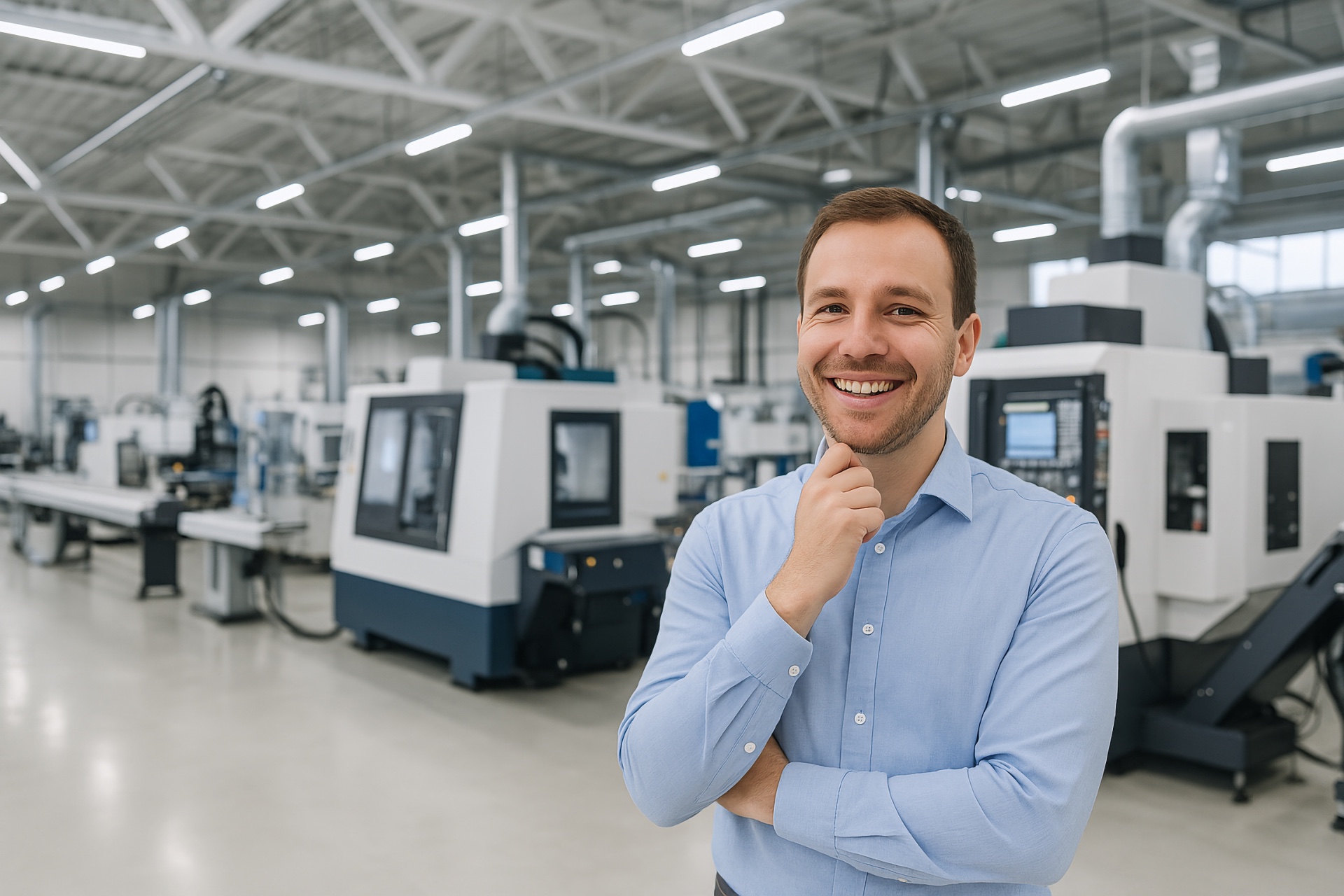
Imagine producing components in repeat batches and focusing solely on delivery instead of managing tooling sourcing, logistics, and performance issues. No replenishment or quality concerns, and no last-minute panic when you realize you're out of the tools you need to complete the job. Today, manufacturers can't afford to be overwhelmed by paperwork that slows down productivity. As Johan Huss, Vice President Digital Products and Services at Sandvik Coromant, explains, the future lies in business models that reduce complexity on the shop floor and directly link costs to actual productivity.
Forty-four percent of engineers spend at least six hours a week dealing with procurement issues, according to Fictiv's latest State of Manufacturing report, which found that 19 percent of engineers surveyed spent more than eight hours a week (a full working day) on procurement activities in 2025. This percentage is up from 13% in 2024, underscoring the growing burden on teams managing an increasingly complex supply chain.
But it's not just the time spent ordering new tools that's at stake. Research by Sandvik Coromant shows that, although tooling represents only 3-5% of total production costs, its poor management negatively impacts many other areas, leading to operator downtime, scrap, and emergency purchases. In fact, up to 20% of an operator's time can be wasted simply searching for the right tool, a prime example of how small setbacks can add up very quickly.
This data also highlights another need: manufacturers need more efficient service and technology-based procurement solutions that streamline workflows and allow teams to focus on higher-value activities.
Let's start by examining how a typical procurement process works. It begins with scheduling a batch of parts, so the first thing to do is check tooling availability. Now, imagine inventory is running low and an engineer or purchasing representative needs to place a purchase order, perhaps from multiple suppliers. Replenishment times will need to be tracked, deliveries monitored, and invoices reconciled. In many cases, teams hold "emergency" inventory that ties up capital and takes up warehouse space.
For a fast-paced machine shop, this cycle repeats endlessly, stealing valuable production time that could otherwise be used to improve processes or solve design challenges. This is where outcome-based models can literally turn this tooling strategy on its head. Instead of purchasing tools as consumables, manufacturers pay a fixed cost for each finished component.
The "pay-per-use" model works like shopping at the supermarket: the buyer pays only for what he uses. Thus, manufacturers pay for a service or product based on how much they will use it, rather than paying a fixed fee. In other words, if a machine shop uses more, it will pay more, and vice versa. It's an efficient and flexible way to access services or products.
At Sandvik Coromant, the Pay per Part service was designed to remove any complexity from the machining processes and offer customers maximum transparency into their production costs. The first phase consists of a detailed analysis of the customer's situation, where the team takes the time to understand their business objectives and review their existing tooling strategy to identify areas for improvement.
This may reveal, for example, that there are too many tools in stock or that a lot of valuable time is wasted searching for the right tool for the entire shop. With this analysis, Sandvik Coromant experts can develop a tooling strategy tailored to the customer's components and challenges. This includes selecting the most efficient tools, setting the right process parameters, and integrating digital solutions to ensure transparency and monitor performance.
Keyly, the result is a fixed cost per component, offering the customer significant benefits in terms of predictability and control. Instead of managing tool costs separately or worrying about unexpected downtime, every aspect of the manufacturing process fits into a single, reliable cost structure.
The "pay-per-use" model also promotes sustainability, as tool reconditioning, reduced packaging, smarter logistics, and longer tool life all help eliminate waste and reduce environmental impact.
The service is not static but committed to continuous optimization, with gradual updates to improve tool life, process stability, and overall efficiency. By combining advanced tooling expertise with continuous, data-driven refinements, the Pay per Part model ensures production that is not only reliable but also increasingly efficient over time.
With Pay per Part, Sandvik Coromant not only provides tools but also offers time and stability, positioning itself as a partner for concrete results. Manufacturers will have the security of knowing that each component will be produced with guaranteed quality and at a fixed cost, while the complexities of tooling, logistics, and optimization will be managed by dedicated experts, ensuring production is always at the highest levels.
Today, manufacturers cannot risk being overwhelmed by administrative procedures. On the contrary, they need a model that recognizes their needs and offers value-oriented support, specific to their performance, starting with tool logistics and the choice of a partner capable of supporting them in a predictable, transparent and intuitive way, leading to increasingly profitable production.
For more information on Sandvik Coromant's Payment per Part service, visit the website.
 Industriale.it certification