Automotive market pressure leads to closure: Fischer Werkzeugbau production facility enters the international market

Publié le 09/02/2026
Automotive market pressure leads to closure: Fischer Werkzeugbau production facility enters the international market

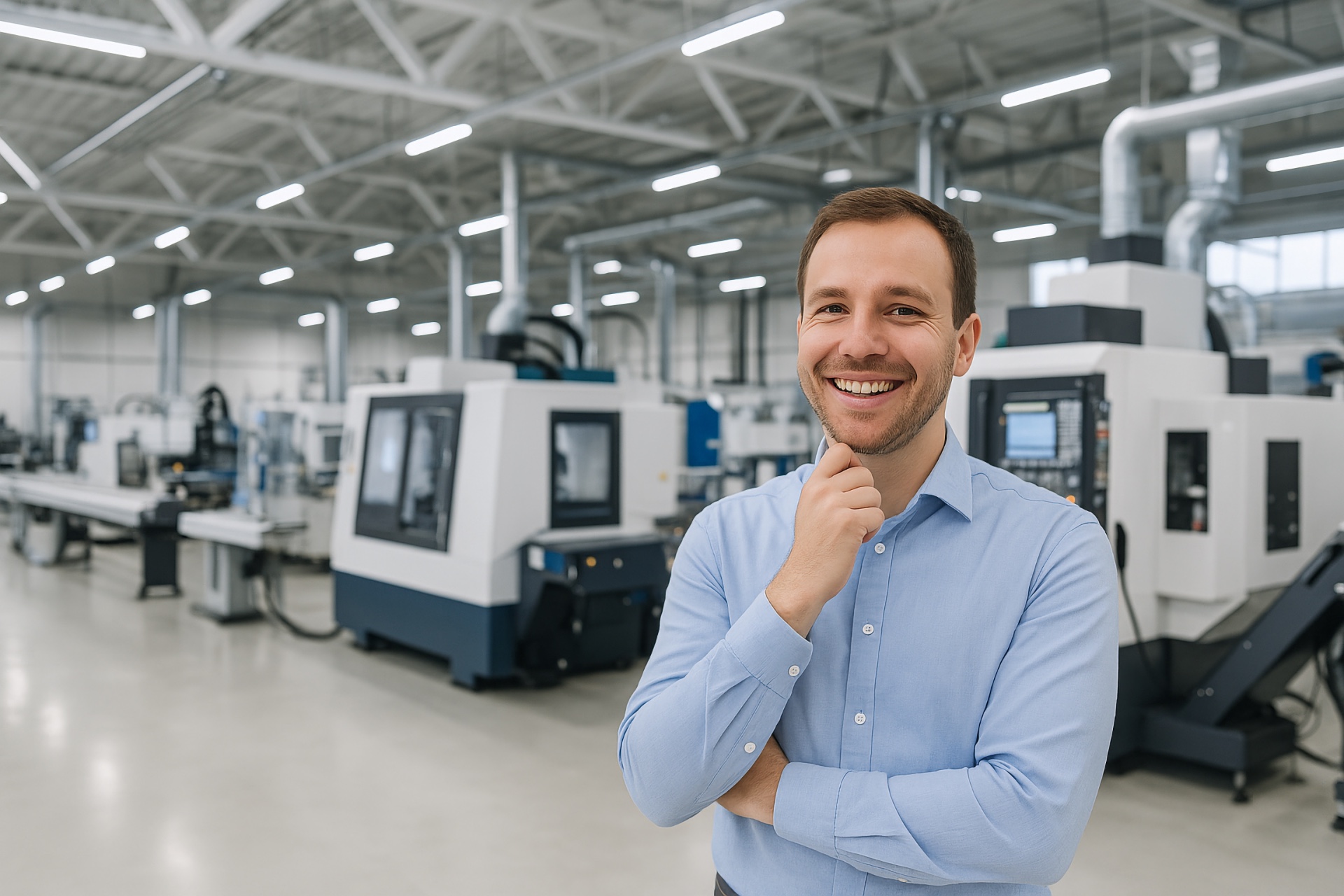
Düsseldorf / Bavaria, February 2026 – Ongoing uncertainty in the automotive industry continues to put pressure on specialised suppliers. Against this backdrop, Bavarian tool and mould manufacturer Fischer Werkzeugbau GmbH, specialised in the development and production of injection moulding and die-casting tools, has decided to cease its business operations.

Founded in 1985, Fischer Werkzeugbau developed into a respected, family-owned specialist in the development and manufacture of injection moulding and die-casting tools, serving customers from its own production facility in Bavaria.

The closure is voluntary and not related to insolvency proceedings. “The decision to close the company was not an easy one,” Johann Fischer, the owner of Fischer Werkzeugbau explains. “However, growing uncertainty in the automotive environment and increasingly challenging market conditions led me to act at an early stage and on my own terms. This allows me to take responsibility; for the company, for our employees and for the quality of the work we have built up over the years.”

The company’s ten employees were informed of the decision at the end of last year. Fischer Werkzeugbau is an independent company and has no affiliation with the Fischer Group or any other similarly named corporate groups.

Complete production facility offered to the international manufacturing market

As part of the closure, the entire production facility will now be auctioned via the international online auction platform Troostwijk Auctions. The online auction is already open and closes on 26 February 2026. The total estimated value of the assets on offer is approximately €1 million.

The auction includes, among others:

  • injection moulding and die-casting tools
  • laser welding equipment
  • deep-hole drilling technology
  • electrodes and other specialised manufacturing assets

The machinery and tooling reflect the high technical standards and specialisation Fischer Werkzeugbau has built up over many years. As such, the auction targets not only domestic buyers, but also international manufacturing companies seeking to expand or modernise their production capabilities.

The sale of a complete, high-quality production setup also highlights the structural challenges currently affecting parts of the German supplier industry. Through the auction, the assets are given the opportunity to continue their lifecycle in new industrial applications.

Pour plus d’informations: Troostwijk Auctions
Automotive market pressure leads to closure: Fischer Werkzeugbau production facility enters the international market

Autres articles susceptibles de vous intéresser

Kipp presents the new remote product line - safe locking and actuation from a distance

KIPP is expanding its range with the REMOTE product line, designed for applications where control elements are not directly accessible. The line primarily includes locking pins, actuating devices, and snap-action latches that can be connected via Bowden cables. A new online configurator, available directly on the respective product page, helps customers select the most suitable components for their application. When installation space is limited or certain functions are not, or should not be, directly accessible, the control point must be relocated. It is precisely for these situations that KIPP has developed the new REMOTE product line. The range primarily includes locking pins, actuators, and latches and is designed for applications requiring the safe remote control of mechanical functions. In machine and equipment construction, this primarily concerns the opening and closing of doors and enclosures.  With swivel or rotating devices, however, the focus is on achieving defined locking positions, while in special vehicle construction, the requirement is to securely position the stops. The requirements are similar, but the installation conditions are often different. To this end, REMOTE combines coordinated components connected via Bowden cables. Force transmission is mechanical, and the control side can be freely positioned. It is also possible to centralize access to functions by connecting multiple locking devices to a single control element via Bowden cables. Conversely, a function can be operated with two independent control elements. In hard-to-reach areas and with large moving parts, this solution significantly improves handling and ergonomics. During installation, the cable control can be adjusted to the required length, allowing different installation conditions to be accommodated without the need for additional special solutions. New locking pin platform with online configuratorThe heart of the REMOTE series is a new locking pin platform for remote actuation. This is complemented by specially designed and design-matched control elements. This new range was developed in response to numerous customer requests for customized solutions, which have now been incorporated into a broader standard range. New additions include variants with extended locking pins, as well as versions with hexagon and thread, with through-threaded sleeve, or with smooth sleeve. The range has also been expanded on the control side. In addition to various handle variants, such as T-grips, star grips, or clamping levers, solutions with one or two Bowden cable connections are available.To enable you to quickly and confidently choose the most suitable solution from the numerous variants, KIPP has developed an online configurator. Available directly on the respective product page, the configurator guides the user through the relevant parameters and combines compatible actuators, locking pins, and cable distributors. This provides designers with a reliable basis for selection, without having to individually test each combination. The configured solution can be transferred directly to the ordering process.Pneumatic locking pins for automated processesIn addition to mechanical solutions, the KIPP range includes pneumatic locking pins with end-of-travel detection. They are used in applications where manual actuation is not possible, such as in automated processes or where cycle times are short. The pin can be operated entirely by compressed air. At the same time, an integrated sensor signals whether it is in the extended or retracted position. This provides the system control system with clear status information.Brief profile of HEINRICH KIPP WERKHEINRICH KIPP WERK is a specialized manufacturer of clamping technology, standard parts, and control components. Its products are manufactured in Germany using a large fleet of machinery. The range includes over 90,000 items, which are quickly available thanks to the company's logistics center. KIPP is therefore a reliable partner for industry and the plant and mechanical engineering sectors.KIPP develops all its products in-house and tests them in a quality assurance process. Thanks to a high degree of production integration, the company is able to produce standard elements, assemblies, and special solutions. When developing KIPP control components, special attention is paid to ergonomics and robustness.HEINRICH KIPP WERK was founded in 1919 and since 1950 has focused on the development of in-house designed clamping devices, such as the classic KIPP clamping lever. The company employs over 530 people worldwide and is present in more than 50 countries.

19/11/2026 En savoir plus

Voestalpine high performance metals italia at vtm turin with special steels and metal powders for au

At VTM Torino 2026, the international business convention dedicated to the mobility industry, scheduled for November 23-25 ​​at Lingotto Fiere, the Italian subsidiary of the voestalpine Group will be present with a space dedicated to B2B meetings, during which it will present its range of BÖHLER specialty steels and metal powders for the automotive and racing sectors.In motorsport, gears and driveshafts are subjected to intense and repeated mechanical stress. Material strength alone is not enough: metallurgical cleanliness and microstructure uniformity come into play, characteristics that affect the component's fatigue resistance. For this reason, the choice of steel takes on a decisive role already in the design phase.The offering of voestalpine High Performance Metals Italia includes BÖHLER materials intended for the most demanding applications in automotive components. These include BÖHLER V180, widely used in the Italian motorsport industry for gears, drive shafts, camshafts, and torsion bars. For applications requiring superior performance characteristics, such as drive shafts and transmission shafts, BÖHLER W460 VMR is available, which stands out for its high hardness and excellent toughness, as well as superior metallurgical cleanliness and excellent fatigue resistance properties.For high-performance crankshafts, the Italian headquarters of the Austrian group offers BÖHLER V358, available in VAR (Vacuum Arc Remelting) quality, which allows particularly high levels of metallurgical purity and fatigue resistance to be achieved. The range also includes BÖHLER V132, a consolidated solution for transmission components that offers a balance between mechanical performance and cost competitiveness, with the advantage of stock availability.The offering for the automotive sector is completed by BÖHLER S600 and S630 high-speed steels, intended for the production of injectors for the automotive and naval sectors. In particular, the reduced tungsten content of BÖHLER S630 enables more efficient use of this critical raw material, without compromising the performance required by the application.Metal powders for additive manufacturingIn addition to specialty steels, voestalpine High Performance Metals Italia offers metal powders for additive manufacturing intended for applications requiring complex geometries and components capable of operating under particularly demanding conditions.These include BÖHLER E185 AMPO, a low-alloy steel developed specifically for 3D printing. The material combines mechanical strength and toughness, can be easily printed and subjected to surface treatments such as carburizing or nitriding. It finds application in motorsports and general engineering, as well as prototyping.The portfolio also includes BÖHLER M789 AMPO, a maraging steel that combines the mechanical properties of 1.2709 with the corrosion resistance of 17-4PH. It can be molded without preheating and reaches a hardness of approximately 52 HRC with simple heat treatment. Its excellent polishability makes it suitable for applications requiring high hardness and corrosion resistance.Participation in VTM Turin will allow voestalpine High Performance Metals Italia to meet with automotive manufacturers and component suppliers, as well as companies specializing in motorsports.B2B meetings will allow for in-depth analysis of companies' needs, from the selection of steels for transmission components to the use of metal powders in additive manufacturing.

19/11/2026 En savoir plus

Allegro microsystems introduces 48v power and precision sensor solutions for physical ai in humanoid

The new devices address critical challenges of size, weight, and safety in humanoid robots. Collaboration with Sarcomere Dynamics makes near-human dexterity possible.Allegro MicroSystems, Inc. (“Allegro”) (Nasdaq: ALGM), a leading global provider of power and sensor solutions for motion control and energy-efficient systems, expands its robotics portfolio with precision sensors and 48V power architectures. The new solutions address some of the key hardware challenges of Physical AI: torque density, thermal management, and functional safety in human-robot collaboration.Key innovations in the portfolio include: 48V power integration:The A81481 power management integrated circuit (PMIC) reduces overall system footprint and hardware costs by 50%, accelerating time to market for robotics OEMs.Precision in high-torque joints: The A17802 and A17803 inductive position sensors are immune to stray magnetic fields, requiring no additional shielding, and tolerate air gap variations. Dexterity in microjoints: The XtremeSense™ TMR CT310 angle sensor and the A33023 Hall-effect angle sensor offer sub-degree accuracy and are a compact alternative to traditional resolvers and optical encoders. “Precise motion control, accurate measurement, and efficient power management are critical for advanced robotic manipulation applications,” said Harpal J.S. Mandaher, CEO and co-founder of Sarcomere Dynamics Inc., said, “We are proud to collaborate with Allegro to integrate their advanced motion controllers, sensors, and power ICs into our Scorpion robotic gripper. This collaboration will continue with our next-generation ARTUS Dex, a 24-degree-of-freedom (DoF) robotic hand designed to deliver human-like dexterity in advanced physical AI applications.” Single-Chip PMIC Simplifies 48V Power Supply for RobotsHumanoid robots are increasingly adopting 48V architectures, which reduce wiring weight and limit resistive losses. Designers, however, face the challenge of safely stepping down higher voltages into very compact packages. Allegro addresses this need with the A81481 integrated circuit, drawing on decades of experience in the automotive industry. The A81481 is a 48V PMIC integrated into a single chip, designed for safety-critical robotic applications. It manages the power and safety functions of the entire system directly from a 48 V bus, without the need for external pre-regulators. The device integrates two buck (step-down) regulators, five low-dropout (LDO) outputs, and ASIL-D-compliant safety diagnostics, including a triple-watchdog architecture, all in a compact 6 × 6 mm package. The A81481 powers distributed sensor arrays and simplifies board layout. It also reduces both the overall system footprint and bill of materials (BOM) costs by approximately 50%. Sub-degree angular accuracy for smooth, natural motion. In high-torque actuators, such as those in shoulder, hip, and knee joints, the A17802 and A17803 inductive position sensors ensure precise and reliable measurements even under the most demanding motor control conditions. The A17803 sensor is also available in an ultra-compact QFN package. Thanks to on-chip compensation and advanced filtering techniques, both operate reliably across varying air gaps. Their inherent immunity to stray magnetic fields also eliminates the need for costly shielding. To meet the more stringent mechanical constraints of robotic hands and fingers, the XtremeSense™ TMR CT310 and Hall-effect A33023 sensors better withstand contamination, mechanical shock, and runout—factors that can compromise the performance of traditional encoders. The CT310 offers sub-degree accuracy in a 2 × 2 mm DFN package. The A33023 adds low latency, immunity to stray magnetic fields, and multiple digital output options, making it well-suited for applications requiring robust diagnostics and support for functional safety requirements. “For fixed-mount industrial robots, weight and space are less stringent because they can use larger cables, large external drives, and liquid-cooled systems,” said Andreas Friedrich, Senior Director of Technology & Strategy at Allegro MicroSystems. “In autonomous humanoid robots with more than 30 degrees of freedom, however, every gram and millimeter counts. We combine native 48V power management, robust motor and gate drivers, inductive sensors immune to stray magnetic fields, and compact TMR sensors, offering robot designers integrated, modular solutions ready to meet safety requirements. This allows them to maximize torque, manage tight mechanical tolerances, and achieve smooth motion.”

17/11/2026 En savoir plus

Abonnez-vous à notre newsletter
Pour rester à jour sur les dernières nouvelles du monde industriel

Contactez-nous
Newsletter Image Lindustriale

L'industriale srl 2026 - Tous droits réservés
Politique de confidentialité - Cookies

Top
This website is protected by reCAPTCHA, therefore the Google privacy policy and terms of service apply.