Beyond the Machinery: ITM INDUSTRY EUROPE Highlights Revealed

Publié le 16/04/2026
Beyond the Machinery: ITM INDUSTRY EUROPE Highlights Revealed

Is Polish industry afraid of artificial intelligence? How can profits hidden in process errors be recovered, and why can’t a modern factory exist without the support of scientists? The upcoming edition of ITM Industry Europe 2026 is much more than just a machine exhibition. It offers four days of intensive crash tests, intellectual sparring between manufacturing practitioners, and presentations of technologies that only yesterday seemed like a futuristic vision. This year’s programme challenges conventional wisdom and focuses on hard, market-driven practice.

A varied programme and dynamic demonstrations in special zones add a unique twist to what has long been the cornerstone of ITM INDUSTRY EUROPE – a massive exhibition featuring several hundred top brands from around the world. The entire event centres around four halls: AUTOMA, MACH-TOOL, SURFEX, and WELDING, which comprehensively showcase the state of modern engineering.

– We are eager for this year’s event to make a significant impact on the industry. Access to knowledge and solutions is key for us, which is why we have launched free accreditation for professionals. We want everyone with an interest in modern industrial technologies to be able to make the most of the trade fair’s extensive programme – both the offerings at exhibitors’ stands and the packed programme of seminars, debates and presentations on the fair’s stages in dedicated zones – emphasises Anna Lemańska-Kramer, Deputy Director of ITM INDUSTRY EUROPE.

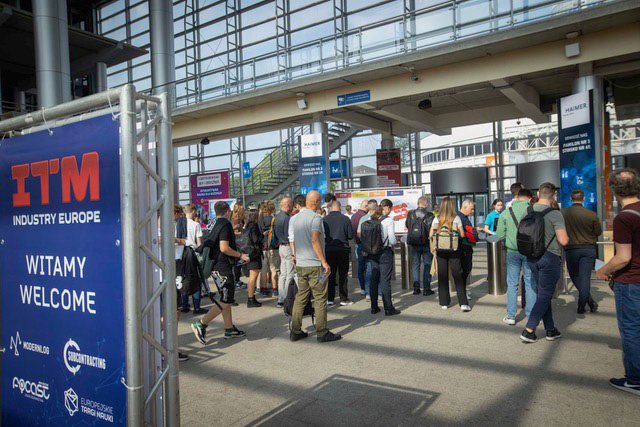
The ITM INDUSTRY EUROPE fair will take place from 26 to 29 May 2026 at the MTP Poznań Expo. At the same time, visitors will also be able to attend the Modernlog, Subcontracting, and European Science Fair exhibitions. 

The Factory Under Pressure from AI – a preview of the DBR77 zone at ITM 2026

During the upcoming ITM INDUSTRY EUROPE 2026 fair in Poznań, the third day of events on the main stage will feature an intense debate on the future of Polish industry. Organised by DBR77, the meeting under the slogan “The Factory Under Pressure – Is Polish Industry Afraid of Artificial Intelligence?” will become a focal point for substantive discussions on the real impact of AI on the efficiency of production facilities. The programme for the event, scheduled for 28 May, has been designed as a dynamic space for the exchange of experiences between technology leaders and business practitioners, focusing on the operational and technological aspects of digital transformation.

The event will open with a presentation on the role of artificial intelligence in modern production management, flowing seamlessly into a series of expert panel discussions. The first panel will focus on the robotisation and adaptability of vision systems, while the next will examine the conditions necessary for the effective implementation of AI in anomaly detection and operational planning processes. The programme will conclude with a logistics debate on decision automation in warehouses and an open practical training session, during which DBR77 experts will demonstrate specific tools supporting the day-to-day work of management staff.

“Our aim at this year’s ITM is to demystify artificial intelligence and present it as a concrete tool that is already solving real-world problems on the shop floor today. We do not wish to speculate about the distant future; that is why we have invited companies to participate in panels demonstrating tangible results from their implementations. The DBR77 zone is intended to be a place where technology meets hard data and business practice, proving that Polish industry not only need not fear AI, but can gain a significant competitive advantage thanks to it – announces Katarzyna Szwarocka, CMO & R&D Specialist at DBR77.

The organisers are placing particular emphasis on the visual aspect of the presentations, encouraging participants to share video footage, system demonstrations, and specific case studies. Thanks to this approach, visitors to the main stage on the third day of the fair will have a unique opportunity to see how advanced algorithms and autonomous systems function in a real production and logistics environment, operating under time pressure and high efficiency requirements.

Assembly Arena – A Strategic Concept for the Assembly Innovation Zone

Alongside promoting theoretical ideas, the ITM Industry Europe trade fair focuses on practical engineering within the Assembly Arena – an innovative concept for assembly innovation. This is a dedicated demonstration and networking space, designed as a comprehensive response to the growing needs of the modern manufacturing market in terms of efficiency, quality, and process ergonomics. The Assembly Arena zone is organised under the patronage of the following companies:

GM Automatyka, an expert in the integration of industrial automation systems, and KWG Group, a supplier of innovative solutions for manufacturing, specialising in ergonomics, assembly tools, and process optimisation. Assembly Arena has been designed as an interactive platform where engineers, production managers, and operations directors can explore a full range of automation solutions, covering both robotic and manual processes. The thematic scope of the zone is extensive and includes, among other things, advanced automation of threaded connections, pick-to-light systems, smart component positioning and clamping techniques, and specialist measurement and vision systems.

This zone becomes a true arena where partners’ ready-made solutions meet real production challenges, offering visitors a unique opportunity to experience the synergy between humans and machines in conditions close to reality. The Assembly Arena concept goes beyond the traditional exhibition format, serving as an interactive educational space that promotes the idea of Lean Robotics and the digital transformation of assembly processes through the implementation of AI systems in quality control. Visitors from key sectors, such as automotive, household appliances, medtech, and furniture, will be able to test hybrid workstations utilising 3D cameras and operator-support tools that have a tangible impact on improving ergonomics and minimising errors. Assembly Arena is a place where people come for concrete solutions, where innovators, integrators, and end customers build a collaborative ecosystem, shaping the modern face of manufacturing facilities.

REPETYTORIUM: Don’t tighten the screw, optimise the process

A key highlight of this year’s ITM Industry Europe programme will be REPETYTORIUM, an original content format initiated by Jakub Giełbaga, an experienced process practitioner who has spent years analysing and optimising workflows on production floors and within company management teams. Under the provocative slogan “Don’t tighten the screw, optimise the process”, this event moves away from traditional conferences or panels based on slide presentations. REPETYTORIUM has been designed as an intensive intellectual sparring session and a form of mastermind, where knowledge is not lectured but developed through dynamic conversation with invited guests – industry practitioners, business owners, and operational managers.

This initiative is a direct response to a real gap in Polish industry: the lack of a space for honest, unfiltered discussion about why, despite costly investments, companies often fail to achieve the expected efficiency. The event format comprises five one-hour thematic blocks, each offering nearly 30 minutes of substantive debate between leaders, followed by time for in-depth interaction with the audience. The programme focuses on specific business challenges, such as identifying hidden production losses, process flexibility, fostering a culture of eliminating micro-downtime, and the analysis of lost benefits (WUKO).

A particular highlight will be a session dedicated to misguided manufacturing investments that, rather than optimising operations, create chaos – aimed at encouraging decision-makers to make responsible, process-oriented choices. REPETYTORIUM at ITM Industry Europe 2026 does not compete with the machinery fair but reinforces its purpose, demonstrating that modern industry is not just about advanced technology, but above all about the rigorous logic of the process and managerial maturity. This is an offering for those seeking a ‘roadmap’ and wishing to understand the real mechanisms governing modern production.

Welding Exhibition: The Pillars of Certification and Quality Standards in Welding

For years, the welding industry has been one of the key pillars of the ITM Industry Europe trade fair, bringing together leading players from the metalworking and steel construction sectors. An integral part of this year’s Welding Exhibition will be a two-day technical meeting designed for engineering staff and quality control specialists: “Welding – Certification of Manufacturers, Processes and Personnel According to European Standards: Current Status and New Developments.” The event will take place on 27 and 28 May in the Welding Speakers’ Corner. 

It is organised by GSI SLV Polska Sp. z o.o., a recognised certification body that has been supporting Polish heavy industry since 2005. Experts from SLV Polska, with many years of experience in metal processing and a wide range of accreditations, will present the current requirements regarding the supervision of production processes and the certification of NDT and welding personnel. The meeting will focus on the practical aspects of implementing European standards, which are essential for confirming the technical competence of plants and their employees within the supply chain for modern industry.

Technology in Action: From Advanced Coating Technology to Interactive Demonstration and Networking Zones

The ITM Industry Europe 2026 programme is complemented by a series of special zones where innovations are tested under real-world conditions. The Industrial Coating Association will run a comprehensive educational programme, combining specialist lectures with dynamic surface treatment demonstrations. In parallel, the editorial team of MM Industrial Magazine will host a series of in-depth discussions with market leaders as part of the MM Speakers’ Corner, providing a platform for the exchange of key business insights. An element of healthy competition and practical component testing will be offered by the Pneumat & BECKHOFF GAMES zone, where advanced pneumatics meets precision control through interactive automation stations.

Operational safety and the protection of personnel will be the focus of the Safety Zone, organised in collaboration with Troax Poland. The highlight of this programme will be spectacular live crash tests, demonstrating the effectiveness of fencing systems and flexible barriers in critical situations. A technological complement to modern production lines will be the Collaborative Robot Zone, located in the AUTOMA Hall, with Schmalz as its main partner. Visitors will have a unique opportunity to compare over a dozen cobot models from leading brands, observing them in dynamic industrial applications. These interactive spaces demonstrate that modern industry is not just about technology, but above all about its safe and effective integration with human labour.

The trade fair’s networking programme will feature the next instalment of an event that proved hugely successful last autumn: LinkedIn Local for Industry, taking place at the heart of the sector on 26 May. This is a space where engineers, manufacturing experts, and business owners can join forces to exchange experiences. Participants can expect a solid dose of substantive content and the opportunity for conversations that develop into real business partnerships.

Science and Industry: The Cornerstone of the Modern Economy

The European Science Fair, organised in collaboration with the Ministry of Science and Higher Education, Adam Mickiewicz University in Poznań, and the MTP Group, will run alongside ITM INDUSTRY EUROPE and is a key element of this year’s technology festival. – This is the second edition of this initiative; the first proved to be a great success, confirming the enormous potential in combining these two worlds – notes Anna Lemańska-Kramer. The exhibition will focus on the achievements of research institutes, universities, and start-ups that address the needs of modern business, In the era of burgeoning Industry 5.0, the innovative discoveries showcased at the fair have the potential for rapid implementation in factories, providing a technological advantage for Polish enterprises. Only an economy capable of global competition and built on strong partnerships with Polish science can fully realise the country’s potential. For this reason, this year’s event is becoming a strategic space for the commercialisation of research and the removal of barriers between science and industry. – A new feature of the European Science Fair 2026 is the ‘duet’ stands. These are shared exhibition spaces designed for science–business teams and university/institute–company partnerships, allowing the entire innovation process to be presented: from the research concept to actual implementation within a company. It is an integrated format that combines scientific achievements with commercial success, showcasing both research findings and solutions used by businesses on a daily basis – adds Anna Lemańska-Kramer.

Pour plus d’informations: ITM Industry Europe
Beyond the Machinery: ITM INDUSTRY EUROPE Highlights Revealed

Autres articles susceptibles de vous intéresser

Ai in manufacturing: from pilot to practical application

Artificial intelligence as a central theme at AMB 2026 // Guido Reimann, VDMA, discusses opportunities, challenges and current developments At AMB, the international trade fair for metalworking, taking place in Stuttgart from September 15 to 19, 2026, Artificial Intelligence (AI) will be one of the three main topics, alongside automation and the circular economy. We discussed the progress made by the industry and the useful insights decision makers can draw from AMB 2026 with Guido Reimann. He is Deputy General Manager of VDMA Software and Digitalization and Coordinator of the VDMA Competence Network on Artificial Intelligence. AMB: AI was a hotly debated topic at AMB 2024. Where does the metalworking industry stand today, in 2026? Has AI become a standard practice, or are pilot projects still prevalent? Guido Reimann: For the mechanical and plant engineering sector in general, as well as for manufacturers of precision tools and machine tools, the topic of artificial intelligence has gained further importance. A VDMA survey in spring 2026 revealed that over 80% of mechanical engineering companies attach great importance to artificial intelligence technologies. Around a third of companies are already using AI solutions in production. This means the era of pilot projects is over. We are seeing increasing practical application of AI. Furthermore, many pilot projects continue to be conducted within companies to further familiarize themselves with the technology and test new application possibilities. Current business application areas related to manufacturing focus on software development, engineering and design, business management, IT, marketing, and communications. Artificial intelligence solutions are also increasingly being used in sales and product-related services for customers in the mechanical engineering industry. To fully leverage their potential, companies must focus on their digitalization and promote it strategically. AMB: The mechanical and plant engineering sector expects a tangible increase in efficiency thanks to AI. What specific figures and success stories do you know in the metalworking industry? And what are the main obstacles to implementation? Guido Reimann: AI-based solutions and approaches not only promise increased efficiency, they also ensure it along the entire value chain. This is reflected, for example, in the reduction of costs for producing technical documentation and user manuals, in the time and cost savings in purchasing by increasing the number of identical components and thus improving purchasing conditions, or in the reduction of unplanned downtime, for example on machine tools, where cost savings of 10 to 20% are possible. Furthermore, AI solutions can significantly accelerate processes in many areas: development, production, sales, and customer service. Comprehensive and sustainable digitalization is a fundamental prerequisite for the use of artificial intelligence and other digital technologies. However, obstacles often include change management, slow implementation, and a lack of human resources. Projects often fail less due to technical issues than to organizational difficulties, inadequate decision-making structures, poor engagement, insufficient knowledge of applications and limitations, and other non-technical factors. And even in the case of AI, it's true that not all pilot projects are successful. The crucial factor is knowing when to stop and redirect limited resources towards more effective digitalization activities. AMB: Which AI technologies and application areas do you believe will dominate AMB 2026, and why is participation in AMB 2026 essential for metalworking professionals interested in AI? Guido Reimann: In traditional product development and design, as well as in software development, we are now seeing numerous AI-based solutions offered by the software industry. At the same time, many mechanical engineering companies have integrated AI technologies into their related products or services, making them available for metalworking. At AMB, industry professionals will find not only manufacturers and suppliers of production machinery, but also software and service providers that support seamless implementation along the entire value chain. AMB: Industrial AI, the European AI Regulation, humanoid robotics, quantum computing: the agenda is getting busier. What developments should decision makers in the metalworking industry definitely keep an eye on over the next five years? Guido Reimann : It's true that the range of technologies, applications, and regulatory requirements relevant to the digital sector is constantly expanding. This also means that equipment manufacturers and application industries must keep pace with this change. Digital technologies are not only becoming increasingly important for internal business processes, but are also significantly influencing companies' business models. Those who are new to new digital technologies and their potential applications within their own company and in their customers' industries can lay the foundation for future success well in advance. A VDMA survey from spring 2026 also shows that mechanical engineering companies are focusing intensively on the following three technologies and intend to expand their use: artificial intelligence, digital twins, and open source software. AMB: Thank you for the interview, Mr. Reimann. Artificial Intelligence at the heart of the program For those who want to delve deeper into the topic of AI at AMB 2026, not only by visiting the exhibition stands but also by interacting directly with experts, the AMB Stage offers two special opportunities on Wednesday, September 16: From 12:00 to 1:30 p.m., VDMA Software und Digitalisierung invites you to a panel discussion entitled "Artificial Intelligence in Production - Practical Examples." This will be followed at 2:00 p.m. by the presentation "AI in Production - From Impact to Added Value," featuring industry, research, and application professionals who will discuss current developments, concrete application examples, and open questions related to the use of AI in mechanical processing. The AMB Stage is located in the atrium (EO010) at the east entrance. About AMB Since 1982, AMB has presented the highlights of the international metalworking industry. "Where metal comes alive" will also be a regular event on the industry's agenda in 2026, this year from September 15 to 19. It is the international marketplace and meeting place for metal cutting, showcasing the latest products, technologies, innovations, services, and concepts in all their facets. AMB is supported by the VDMA Precision Tools, VDMA Software and Digitalization, and the VDW Verein Deutscher Werkzeugmaschinenfabriken e.V. (German Machine Tool Builders' Association). Further information is available at www.amb-messe.de/

18/06/2026 En savoir plus

Machine tools: economic recovery remains fragile due to persistent structural pressures

CECIMO examined the challenges the sector will face in 2026 and discussed future risks and opportunities, in a context still characterized by political and economic uncertainty. Economic situation and prospects In 2025, the European machine tool sector continued to face a challenging economic environment, with weak demand and increased global competition putting pressure on CECIMO member companies. European machine tool production is estimated to have decreased by approximately 6.6% compared to 2024, reaching €23.5 billion, demonstrating that the slowdown has yet to ease. This trend is also impacting Europe's position in the global market. In 2025, Europe's share of global machine tool production fell to approximately 30.8%, almost 2 percentage points less than the previous year. This trend is particularly worrying when compared to 2023, when Europe accounted for 33.4% of global production. This means that Europe has lost almost 3 percentage points of global production share in just two years, indicating a gradual erosion of its "industrial position." Furthermore, the European machine tool market showed clear signs of weakening when considering consumption levels, which decreased by 3.7% compared to 2024, reflecting lower demand across European countries. Trade flows also declined: exports by European machine tool manufacturers decreased by 8.8%, while imports fell by 4.2%. The main export destinations for European machine tool manufacturers (excluding Europe) are the United States, China, and India. At the same time, when looking at European machine tool import flows, Japan, China, and South Korea continue to be the most significant suppliers. Overall, these developments confirm that the sector has been operating in a challenging economic environment, impacted by slowing investment, persistent uncertainty, geopolitical tensions, and weakening momentum in both European and global markets. Taken together, these factors have reduced demand for machine tools and negatively impacted the operating conditions of CECIMO members. A similar picture emerges when looking at the order levels of the CECIMO8* index. Domestic orders decreased by approximately 1.7% in 2025 compared to 2024, marking the third consecutive year of contraction. By contrast, foreign orders increased by 1.2% over the same period, marking the first year of growth after two consecutive years of decline. CECIMO's projections for 2026 indicate a modest improvement after two consecutive years of declining production and consumption in the European machine tool sector. Consumption and production levels are expected to increase in European countries, suggesting a possible stabilization. CECIMO's estimates for orders indicate an improvement in overall order volumes in the CECIMO8 index countries in 2026. However, this outlook remains fragile and exposed to external shocks and general market conditions and should therefore be interpreted as a transition phase rather than a full recovery. The sector will continue to operate in a highly uncertain environment, characterized by geopolitical tensions and conflicts, trade risks, potential tariff measures, energy market volatility, and weak investment dynamics in major European economies. Since European machine tool manufacturers remain highly exposed to international trade and industrial investment cycles, any deterioration in these conditions could limit the expected recovery and potential future recoveries. At the same time, CECIMO sees potential support from positive spillover effects related to public investment and strategic sectors such as defense, aerospace, electrification, artificial intelligence technologies, and advanced engineering. These sectors could help support demand for advanced and high-precision manufacturing solutions, but their impact will depend on timely implementation and avoiding further delays. A stable trade environment, increased industrial investment, and effective policy measures could mark the beginning of a gradual recovery for the European machine tool sector. Without these conditions, Europe risks further weakening its position in machine tool technologies, while global competitors continue to strengthen their industrial capabilities. "The current situation confirms that Europe cannot take its industrial leadership for granted. European machine tool manufacturers continue to operate in a challenging environment, characterized by declining demand, persistent global uncertainty, and growing competitive pressure. While some opportunities may emerge in strategic sectors, Europe needs a stable policy framework, increased industrial investment, and faster implementation of measures to support advanced manufacturing," commented François Duval, President of CECIMO.

16/06/2026 En savoir plus

Made in steel 2027: exhibition space sales open

Registration is now open for the twelfth edition of the international Conference & Exhibition dedicated to the steel industry. In a European market that is showing signs of stabilization after difficult years, the event confirms itself as a strategic platform for business and discussion between operators in the sector. The exhibition space sales campaign for Made in Steel 2027 , the international event dedicated to the steel industry, has officially begun. Scheduled for May 11, 12, and 13 at Fiera Milano , the event is organized by siderweb in conjunction with Fiera Milano. Interested companies can reserve their space at an event that, year after year, has established itself as an international reference point for steel producers, distributors, traders, service centers, processors, and users. An "Early Bird" option will also be available for exhibitors who book by June 19. The twelfth edition of Made in Steel presents itself with a renewed layout and expanded spaces in pavilions 8, 12 and 16 , designed to welcome an ever-increasing number of companies and promote visibility, networking and business opportunities along the entire steel supply chain. Following the growth of the 2025 edition, which attracted over 19,000 attendees and nearly 400 companies from all over the world, Made in Steel is looking to 2027 with the aim of further consolidating its role as a European platform for discussion, innovation, and development for the sector. "The opening of sales represents the first step towards an edition that aims to position the Italian steel industry in an even more international and business-oriented context," said Made in Steel CEO Paolo Morandi. "In a period of profound transformation for the European steel industry, the biennial event aims to be a place where companies, institutions, and stakeholders can meet to develop new growth opportunities and jointly address the challenges of competitiveness and industrial transition." In addition to the exhibition area, Made in Steel 2027 will also offer a rich program of conferences, round tables, and in-depth discussions dedicated to key topics in the steel industry: market dynamics, regulations, technological innovation, sustainability and the circular economy, geopolitics, and industrial competitiveness. The market context: between first signs of recovery and new competitive challenges The opening of registrations for Made in Steel 2027 comes at a particularly significant time for the European steel market. After three consecutive years of declining demand, the sector is showing signs of stabilization, despite a still highly uncertain environment. According to Eurofer's latest Economic and Steel Market Outlook, apparent steel consumption in the European Union is expected to return to growth in 2026, albeit at a moderate pace, supported by a gradual improvement in industrial activity and investment. However, demand levels remain lower than those recorded before the pandemic, and factors such as high energy costs, geopolitical tensions, and growing competitive pressure from non-European imports continue to weigh on demand. In Italy, the European Union's second-largest steel producer after Germany, companies in the supply chain are undergoing a transition phase that requires significant investments in energy efficiency, digitalization, and decarbonization. At the same time, strengthening strategic sectors such as construction, infrastructure, energy, and advanced manufacturing could help sustain demand in the coming years. Made in Steel is the international conference and exhibition dedicated to the steel industry. It is organized by siderweb - the steel community alongside Fiera Milano. Made in Steel is a conference and exhibition. It offers opportunities for business and reflection, networking and learning. It is both an exhibition showcase and a cultural hub that, with conferences, forums, and roundtables, aims to foster competitive collaboration and the exchange of information, essential elements for business growth. Since 2023, Made in Steel has been certified for sustainable event design and management according to the ISO20121 standard. siderweb - The Steel Community is the only online publication in Italy dedicated entirely to the steel industry. It is a point of reference for industry professionals, thanks to its simple style, focus on in-depth analysis, and objectivity. Since 2009, it has been tracking the prices of raw materials and steel products on the national market every week, now numbering over 60, using a method certified by the Laboratory of Statistics, Data, Methods, and Systems at the University of Brescia. Since 2022, it has published five weekly indices for scrap, carbon steel, long and flat products, and stainless steel. Since 2005, it has organized Made in Steel, the international Conference & Exhibition dedicated to the steel industry, and structured its contents: conferences, interviews, and outlooks.

15/06/2026 En savoir plus
Abonnez-vous à notre newsletter
Pour rester à jour sur les dernières nouvelles du monde industriel
Contactez-nous
Newsletter Image Lindustriale
Dati Legali

L'industriale s.r.l.
P. IVA: 12212870153
Codice Fiscale: 12212870153

Sede Legale

Via Carlo Dolci, 32
20148 Milano (MI)
Italy

Registro Imprese

Iscrizione R.I.: 12212870153
REA: MI-1539011
Capitale sociale: Euro 10.400,00 i.v.

Top
This website is protected by reCAPTCHA, therefore the Google privacy policy and terms of service apply.